3.0 vs. 3.5 vs. 4.0 Pickleball: Tournament Skill Levels Explained
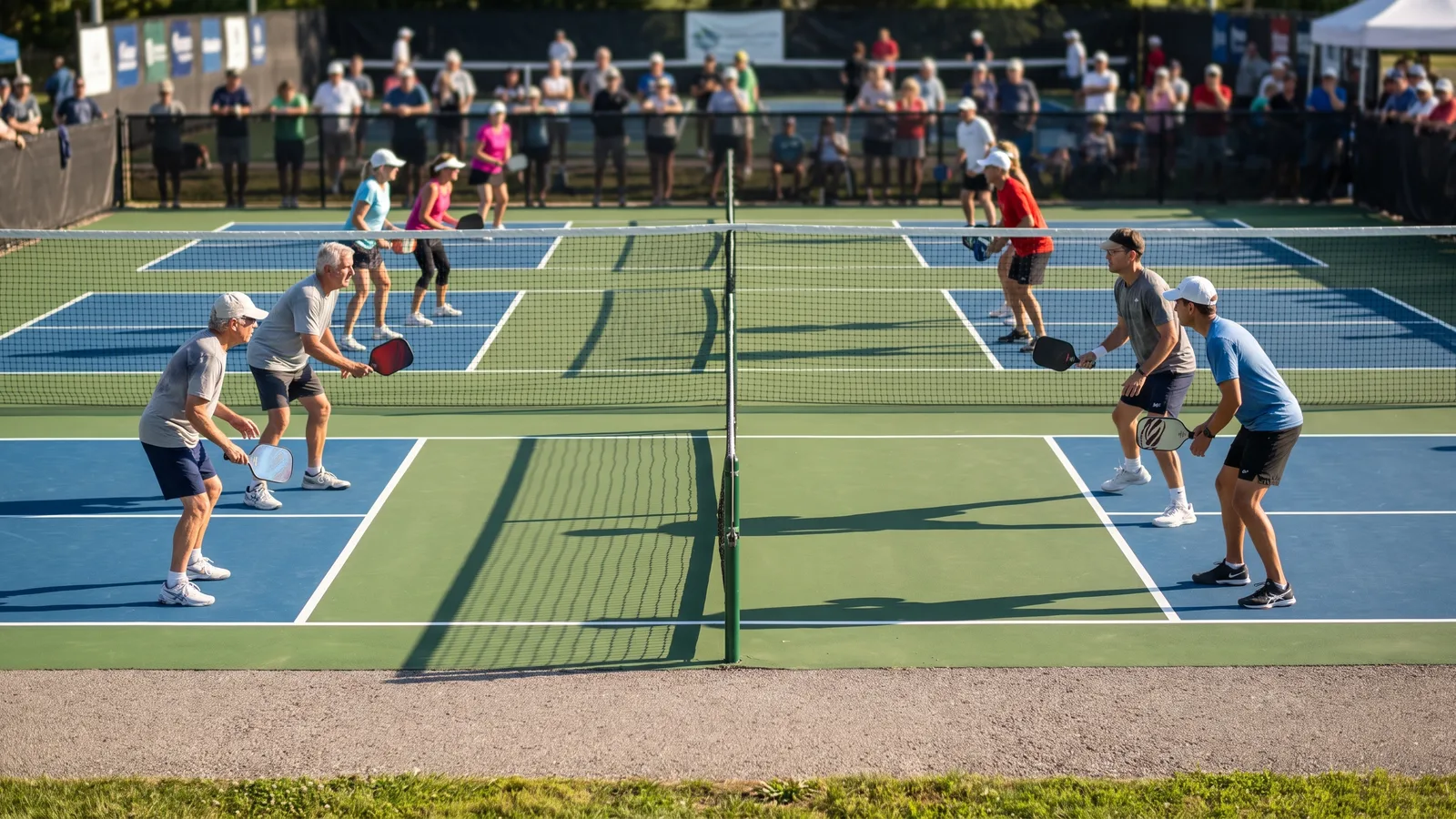
The short version: 3.0 players are still building consistency, 3.5 players have reliable serves and returns but inconsistent soft-game execution, and 4.0 players can construct points — mixing drives, drops, resets, and volleys on purpose rather than by accident. The dividing line between each level is not any single shot. It is how often your shots hold up under pressure, and whether you and your partner move and plan as a unit.
These three levels also happen to be where most tournament pickleball lives. In Tournament Pickle's index of upcoming events (analyzed September 8, 2026, covering 42,012 non-canceled upcoming divisions across 1,716 tournaments), 3.0, 3.5, and 4.0 are the three largest single-level divisions by a wide margin. If you are choosing a bracket for your next event, this guide explains what each label means, how tournaments actually apply them, and how to place yourself honestly.
Where the definitions come from
The 2.5-through-5.5+ scale comes from USA Pickleball's player skill levels, first standardized in 2005. These are ability descriptions, not calculated ratings: they describe what a player at each level can consistently execute across serves, returns, dinks, third shots, volleys, and strategy. USA Pickleball labels the levels this way:
- 2.5 — Beginner: limited experience, can sustain short rallies and keep score
- 3.0 — Advanced Beginner: developing stroke consistency, learning the soft game
- 3.5 — Intermediate: reliable serves and returns, moderate control, developing patience
- 4.0 — Advanced Intermediate: consistent point construction, team movement, limited unforced errors
- 4.5 and up — Advanced to Pro: high-level execution of all shot types
Note that a skill level is not the same thing as a DUPR rating. DUPR is a match-result algorithm that produces a number like 3.74; a skill level is a self-assessed or organizer-assigned ability tier. Many tournaments name their brackets with skill levels and then verify entry with DUPR ranges — we cover how those two systems interact in our guide to what DUPR rating you need for a tournament.
3.0: You can rally — now build the soft game
Per USA Pickleball's definitions, a 3.0 player consistently gets serves and returns in play but with limited depth control, sustains medium-length dink rallies, and is starting to develop the third-shot drop as a way to get to the net. Court positioning is improving — a 3.0 player moves toward the non-volley zone when the opportunity is there — but unforced errors still decide most games.
What that looks like in a real match: rallies end more often on mistakes than winners. Points are frequently lost on missed third shots, pop-ups off the volley, and dinks that sit up. Strategy exists, but executing it under pressure is the gap.
You belong at 3.0 if...
- Your serve and return land in reliably, but you cannot yet place them deep on purpose
- You know what a third-shot drop is and attempt it, with mixed results
- You lose more points on your own errors than on opponents' winners
3.5: Consistent strokes, inconsistent decisions
The 3.5 level is the most active tier in tournament play by registrations in our tracked data (more on that below). USA Pickleball describes a 3.5 player as placing a high majority of serves and returns with varying depth and speed, dinking with moderate height-and-depth control, and selectively mixing soft shots with power — with inconsistent results. A 3.5 player is aware of their partner's position and can move as a team, understands stacking, and is beginning to execute resets.
The phrase that matters most in that definition is "inconsistent results." A 3.5 player owns most of the shots a 4.0 player owns. The difference is conversion rate: the 3.5 drop works six times out of ten, the attackable-dink read comes a beat late, and the block volley sometimes pops up instead of dying in the kitchen.
You belong at 3.5 if...
- You place serves and returns deliberately and rarely miss them
- You can dink patiently but still lose kitchen battles to faster hands or better resets
- You mix drives and drops intentionally, but your third shot breaks down against strong returners
4.0: Point construction becomes deliberate
At 4.0, USA Pickleball's definition shifts from developing skills to executing them: consistent third-shot strategies that are not easily attacked, blocked hard volleys dropped into the non-volley zone, comfortable swinging volleys, effective poaching, and communication-driven team movement including stacking. A 4.0 player changes game plans based on the opponent's weaknesses and keeps unforced errors limited.
In practice, 4.0 matches feel structurally different from 3.5 matches. Points are longer, transitions through the midcourt are controlled rather than chaotic, and hands battles at the net decide games. If you watch a 4.0 match, you will see teams reset out of trouble repeatedly — the skill that most visibly separates 4.0 from 3.5.
You belong at 4.0 if...
- Your third shot reliably gets your team to the net against good returns
- You can block a hard drive and drop it unattackably into the kitchen
- You and your partner poach, stack, and switch by plan, not by accident
What tournament divisions actually look like
Skill definitions are one thing; how organizers use them is another. Tournament Pickle indexes tournament listings across major registration platforms. As of September 8, 2026, among the 42,012 upcoming non-canceled event divisions in our index, 38,473 (about 92%) carry a numeric skill level in the division name. Here is a first-party breakdown of divisions that list exactly one skill level:
- 4.0: 6,744 divisions
- 3.5: 6,596 divisions
- 3.0: 5,879 divisions
- 4.5: 5,107 divisions
- 5.0: 2,351 divisions
- 2.5: 1,211 divisions
Another 8,066 upcoming divisions span multiple levels — formats like "3.0–3.5" or "4.0+" that widen the pool so brackets fill. Organizers write these ranges in several styles: we count roughly 1,700 dash-style ranges (3.0–3.5), about 1,100 open-ended "plus" divisions (3.5+), and a smaller number of slash-style combos.
Registration activity tilts toward the middle. Among upcoming single-level divisions where our index has registration counts recorded (about 27% of divisions, so treat this as directional rather than complete), 3.5 divisions hold the most registrations, ahead of 3.0 and 4.0, with 4.5 and above thinning out quickly. The competitive pyramid is widest at 3.5 — which is also why 3.5 brackets are the most likely to fill and waitlist early.
Two organizer habits worth knowing before you register:
- DUPR-verified brackets are common but not universal. Nearly 2,000 upcoming divisions in our index mention DUPR explicitly in the division name, often with hard ranges like "DUPR 2.5–3.49." In those events the algorithm, not your self-assessment, decides eligibility.
- Skill almost always pairs with age. The large majority of skill-banded divisions also carry an age qualifier (19+, 50+, 65+, and so on), so your real bracket choice is a skill-age combination, not skill alone.
How to pick your level for a tournament
Most tournaments treat skill levels as minimums: playing up one level is generally allowed, playing down is restricted or prohibited. With that in mind:
- If you are between levels, enter the higher one only with a reason. Playing up is a fine choice when you want harder matches and expect to lose early. If you want competitive matches and a real shot at medals, enter the level where you win roughly half your games in rec play.
- If the bracket is DUPR-verified, your number decides. A 3.55 DUPR shuts you out of a "DUPR 2.5–3.49" bracket regardless of how you self-assess. Check the exact range in the event listing.
- If you are unrated, use USA Pickleball's self-assessment as a starting point and be honest about the "consistency" language. Nearly every player owns highlight-reel shots at their level; the definitions are about what you do on the tenth attempt, not the best one.
- Sandbagging ruins the event for everyone, including you — winning a 3.0 bracket as a 4.0 player tells you nothing about your game.
Once you know your level, you can filter thousands of upcoming events by division on our tournament search. If it is your first event, our first tournament guide covers registration, formats, and game-day logistics.
Frequently asked questions
What is the difference between a 3.5 and a 4.0 pickleball player?
A 3.5 player controls serve and return depth and is starting to mix soft and power shots, but with inconsistent results. A 4.0 player consistently executes third-shot strategies, blocks hard volleys, resets points, and moves with a partner as a team. The gap shows up most in consistency under pressure, not in any single shot.
Can a 3.0 player enter a 3.5 tournament division?
Usually yes. Most tournaments treat skill levels as minimums, so playing up one level is generally allowed while playing down is restricted. Check the specific event's rules, because DUPR-verified brackets may enforce a hard rating ceiling instead.
Is a pickleball skill level the same as a DUPR rating?
No. Skill levels (3.0, 3.5, 4.0) are ability descriptions maintained by USA Pickleball based on shot proficiency and strategy. DUPR is a match-result algorithm that produces a number like 3.74. Many tournaments use skill-level labels for brackets and some verify entry with DUPR ranges, but the two systems are maintained separately.
What skill level are most tournament players?
Based on Tournament Pickle's index of upcoming events as of September 2026, the 3.0, 3.5, and 4.0 divisions are by far the largest, with roughly 5,900 to 6,700 single-level divisions each among events listing exactly one skill level. Registration activity in our tracked subset is heaviest at 3.5.
The bottom line
Read the three definitions, then ask one question: how often does my game hold up when the other team is pressing? If your rallies end on your errors, you are a 3.0. If you own the shots but not the conversion rate, you are a 3.5. If you construct points and reset out of trouble on purpose, you are a 4.0. Pick the bracket that matches your tenth-best point — then go find an event that fits on Tournament Pickle.